


1997
Listed as a UNESCO World Heritage Site
~$200K
Entry point for apartments and small commercial units
$0
Agent commission for buyers
1–1.5%
Typical attorney fees on a purchase
Panama City’s Historic Quarter
In short: Casco Viejo is Panama City’s UNESCO-listed colonial district, with restored apartments, lofts, whole houses and commercial spaces in historic buildings. Listings include commercial offices from $197,800 and loft residences from $263,424; buyers pay $0 agent commission, and typical attorney fees are 1–1.5% of a purchase.
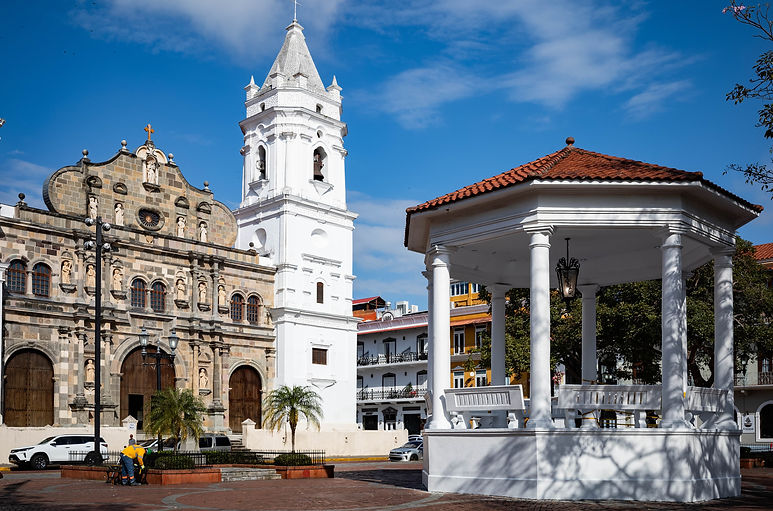
Casco Viejo, also called Casco Antiguo or San Felipe, is Panama City’s colonial district and part of a UNESCO World Heritage Site. It sits on a small peninsula on the Bay of Panama, where restored 17th- to 20th-century buildings stand a short walk from rooftop bars, boutique hotels, plazas and the Cinta Costera waterfront.
Property here ranges from restored apartments and colonial lofts to whole houses, boutique hotel buildings and street-level commercial space. Heritage rules limit what can be built, so supply grows slowly. Panama Properties represents buyers here: we show you what is available, including properties not advertised online, and help you check each one before you commit.

Luxury Properties & Investment Opportunities
in Casco Viejo
Casco Viejo stands as Panama City’s most iconic and culturally rich district, and Panama Properties presents a select collection of featured Casco Viejo properties for sale within this historic UNESCO World Heritage neighborhood. Our offerings include restored colonial residences, luxury lofts, boutique condominiums, and high-performing investment properties set among vibrant plazas, waterfront promenades, and world-class dining. With its rare architectural charm, strong short-term rental demand, and limited inventory, Casco Viejo real estate continues to attract discerning buyers and investors seeking both lifestyle appeal and exceptional long-term value in Panama’s most distinctive real estate market.


Why Buyers Choose Casco Viejo
Protected Heritage
Restoration and building work is controlled by heritage rules, which preserves the character of the district and limits new supply.
Limited Supply
Only so many colonial buildings exist, and whole houses rarely come to market. Most listings are apartments in restored buildings.
Walkable Living
Restaurants, cafés, galleries, rooftop bars, plazas and the waterfront are all within a few minutes on foot, which is rare in Panama City.
Rental Demand
Visitors, executives, diplomats and remote workers all look for places to stay here. Results depend on the building, the unit and its management.
Restoration Incentives
Qualifying restored properties can receive tax benefits under the historic-district incentive law. Each property’s status is different, so it must be verified.
Central Location
Close to the financial district, Avenida Balboa, the Amador Causeway and the Panama Canal, inside the country’s capital and business centre.
Restoration Incentives and Property Tax
Panama encourages restoration of the historic district through Law 136 of 2013, updated by Law 519 of 2026.
What Qualifying Properties Can Receive
An exemption from transfer tax on the first sale after restoration (for investments of at least US$50,000)
An income tax exemption on commercial activity for up to 10 years
Duty-free import of restoration materials and equipment
Access to preferential-rate restoration mortgages
Property Tax Exemptions
Many restored buildings also carry property tax exemptions, so some owners pay little or no property tax for a period. Exemptions are tied to each property and its restoration date, so the remaining term varies.
We verify each property’s exemption status at the Public Registry and with the tax authority before you buy. Benefits depend on the property meeting the program’s requirements, so speak with us and a Panamanian attorney before relying on any incentive.
Know Before You Buy
Casco Viejo is unlike the rest of Panama City. These are the points we check with every buyer.
Heritage Rules Apply
The district is divided into a core monumental zone with stricter restoration rules and surrounding areas with more flexible codes. Changes to a building need approval from the heritage authorities.
Elevators and Parking Are Not Standard
Many restored buildings have no elevator, little or no parking, and narrow staircases. Newer conversions sometimes include them. Tell us early if step-free access matters.
Short-Term Rental Rules Vary
Each building’s condominium (PH) rules decide whether stays under a set number of days are allowed. Confirm the rules in writing before buying for rental income.
Check the Tax Exemption
Do not assume a property is exempt. Confirm whether an exemption applies, when it started and how many years remain.
Renovation Quality Varies
Older restorations differ widely. Have the structure, roof, plumbing, electrical and waterproofing inspected, especially in older conversions.
Budget for HOA Fees
Monthly condominium fees typically run from about US$175 to US$400 or more, depending on the building’s size and amenities.
Casco Viejo’s Micro-Areas
A few blocks can make a real difference to views, noise and rental appeal.
Plaza Catedral
The district’s main square, facing the Metropolitan Cathedral. Prestigious, central and close to the Presidential Palace.
Plaza Bolívar
An elegant square surrounded by restaurants and the San Francisco church. Calmer in the evenings than the busiest streets.
Plaza de Francia and Las Bóvedas
The tip of the peninsula, with sea walls, the waterfront promenade and some of the district’s best views and high-end buildings.
Avenida Central
A livelier, evolving street with shops, cafés and more activity day and night.
Avenida A and the Edges
Streets on the edges of the district that are still changing, with restoration projects and generally lower entry prices.
Santa Ana, Next Door
The neighbourhood just outside Casco, where new loft residences offer a newer building at a lower price point within walking distance.
Where Casco Viejo Is
On a small peninsula at the southern end of Panama City, connected to the Cinta Costera, Avenida Balboa and the Amador Causeway.
How Buying in Casco Viejo Works
01
Talk to Us First
Tell us your budget, whether you will live in it or rent it, and must-haves like an elevator, parking or a terrace.
02
View and Compare
We show you listed and unlisted properties, in person or by video, and point out building rules and condition issues.
03
Offer and Negotiation
Prices are often negotiable depending on condition, the seller’s timeline and whether the unit is occupied.
04
Due Diligence
Your attorney checks title, liens, permits, condominium rules and history, and the property’s tax exemption status.
05
Promise to Purchase
You sign a promise-to-purchase agreement and pay a deposit, commonly 10% to 20%, held in escrow.
06
Closing and Registration
The deed is signed and your attorney registers it in your name at the Public Registry. Buyers pay no agent commission.
Before closing, see Title & Due Diligence and Buying & Closing Costs.
Casco Viejo Real Estate FAQ
Can foreigners buy property in Casco Viejo?
Yes. Foreigners have the same property ownership rights as Panamanian citizens, and Casco Viejo is not affected by the border restrictions that apply in some parts of Panama. Most buyers take title in their own name or through a Panamanian corporation or private interest foundation, registered at the Public Registry.
What types of property are for sale in Casco Viejo?
Restored apartments and lofts in colonial buildings, new loft residences in neighbouring Santa Ana, whole colonial houses, commercial and retail spaces, boutique hotel buildings and restoration projects. Apartments are the most common; whole houses are rare.
How much does property cost in Casco Viejo?
Entry-level apartments and small commercial units start at around US$200,000. Well-finished one- and two-bedroom apartments typically range from about US$270,000 to US$900,000, and larger homes, whole buildings and portfolios run into the millions. Price depends on the building, views, terraces, and whether there is a pool or elevator.
What rental returns can I expect?
Returns depend on the building, views, outdoor space and management. After management fees (typically 20% to 25% for short-term rentals), HOA fees and maintenance, net returns are well below gross rent, so we model both before you buy.
Can I rent my Casco Viejo apartment on Airbnb?
Sometimes. Short-term rental rules are set by each building’s condominium (PH) regulations, and some buildings prohibit stays under a set number of days. Confirm the rules in writing during due diligence.
Do Casco Viejo properties pay property tax?
Many restored buildings carry property tax exemptions under the district’s restoration incentive laws, so some owners pay little or none for a period. Exemptions are tied to each property and its restoration date, so we verify the status and remaining term before purchase.
What tax incentives apply to restored properties?
Law 136 of 2013, updated by Law 519 of 2026, offers qualifying restored properties benefits such as a transfer tax exemption on the first sale after restoration, an income tax exemption on commercial activity for up to 10 years, duty-free import of restoration materials, and preferential restoration mortgages.
What are the closing costs when buying in Casco Viejo?
Buyers pay no commission to their real estate agent. Your main cost is your attorney, typically about 1% to 1.5% of the price, plus small notary and Public Registry fees. The 2% transfer tax is customarily paid by the seller, and some restored properties are exempt from it on their first sale.
What are HOA fees like?
Monthly condominium fees typically range from about US$175 to US$400 or more, depending on the building’s size and amenities such as pools, rooftop terraces, elevators and security.
Do Casco Viejo buildings have parking and elevators?
Not always. Because of heritage rules, many restored buildings have no elevator, limited or no parking, and narrow staircases. Newer conversions and some larger buildings include them.
Can buying in Casco Viejo help me get residency?
It can. As of September 2026, the Qualified Investor visa needs US$300,000 for a new, first-sale property and US$500,000 for a resale. Most restored Casco apartments are resales, so they usually need US$500,000. A US$200,000 purchase can support the Friendly Nations visa if your country qualifies. Compare residency routes.
Can I buy without being in Panama?
Yes. Many clients buy remotely after video tours, signing through a power of attorney and sending funds to an attorney’s escrow account. We handle viewings, due diligence and closing coordination on the ground.
Ready to Buy in Casco?
Tell us your budget, whether you plan to live in the property or rent it, and when you can visit or join a video tour. We will show you what is available, including properties not advertised online, and help you check each building before you commit.
Message us on WhatsApp at +507 6169-2453. Buyers pay no agent commission.
Panama Properties
Unit 1 Plaza Pedasí (Super Pedasí Plaza)
Avenida Dr. Belisario Porras
Pedasí, Los Santos 7401, Panama
WhatsApp: +507 6169-2453
Email: ken@panama-properties.com